I Grew Up in This Kitchen. I Still Ordered Takeout Four Nights a Week.
My name is Lin. I'm the granddaughter who writes everything down. For most of my adult life I had a grandmother who could put dinner on the table in twenty minutes, and a phone full of delivery apps that I used four nights a week.
I want to be honest about how silly that was. I would sit in her kitchen on a Sunday, eat tomato and egg over rice until I couldn't move, drive home, and by Tuesday I'd be paying a delivery fee for a carton of something sweet and heavy that never tasted like anything she made.
I had a reason, or I thought I did. I believed her cooking was a skill. Fifty years of practice, a wok seasoned before I was born, hands that measured salt without looking. You don't learn that from a recipe card, I told myself. So I never really tried.
Then one Wednesday evening I watched her cook a full dinner from what looked to me like an empty pantry, and I realized I'd had the whole thing backwards for years. This article is me explaining what I got wrong. I'm writing it down because I suspect you've been getting it wrong the exact same way.
One Night I Wrote Down Everything in Her Pantry. I Counted About Twelve Things.
It was a Wednesday. I came over unannounced around six. She looked at me, looked at the rice jar, and started dinner without a word. I remember thinking there was nothing in that kitchen. The shelf looked bare. A few bottles, a bag of rice, some dried mushrooms in a jar with a rubber band around the lid.
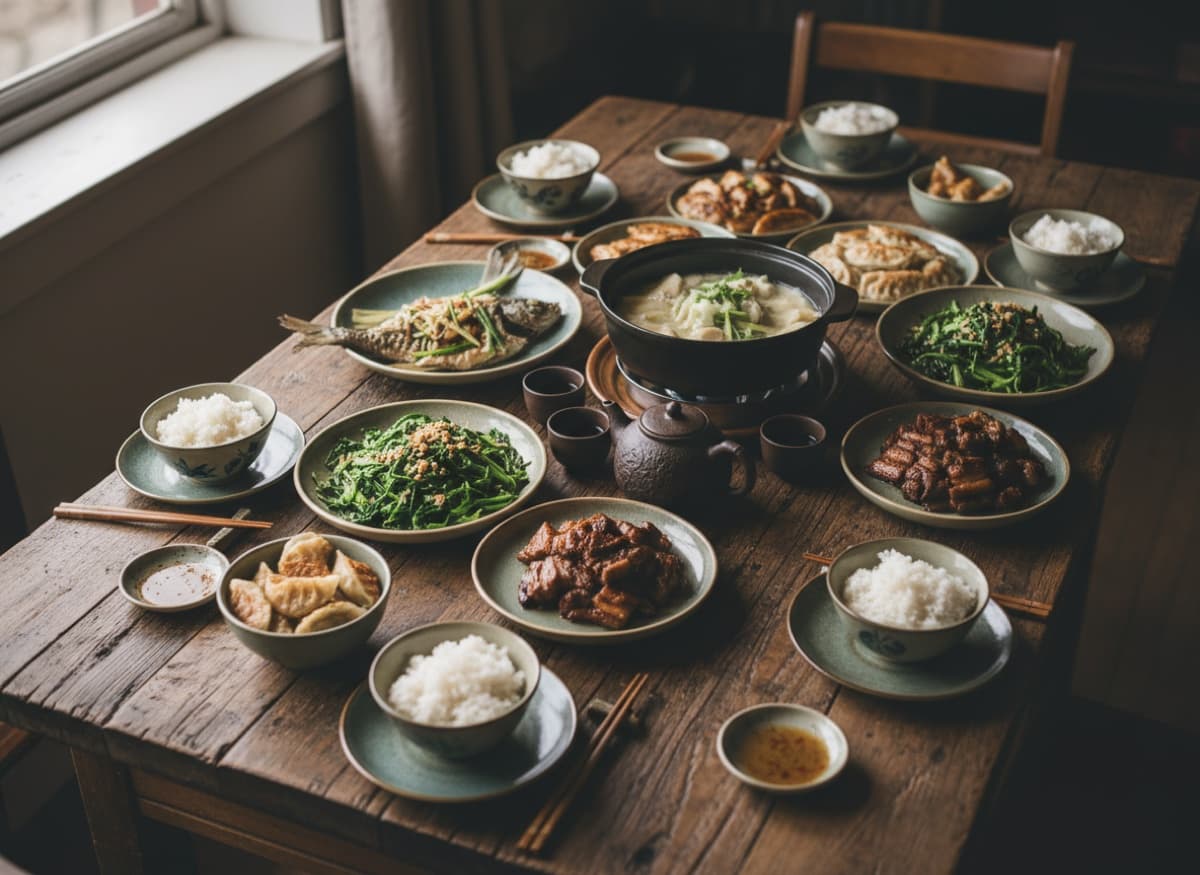
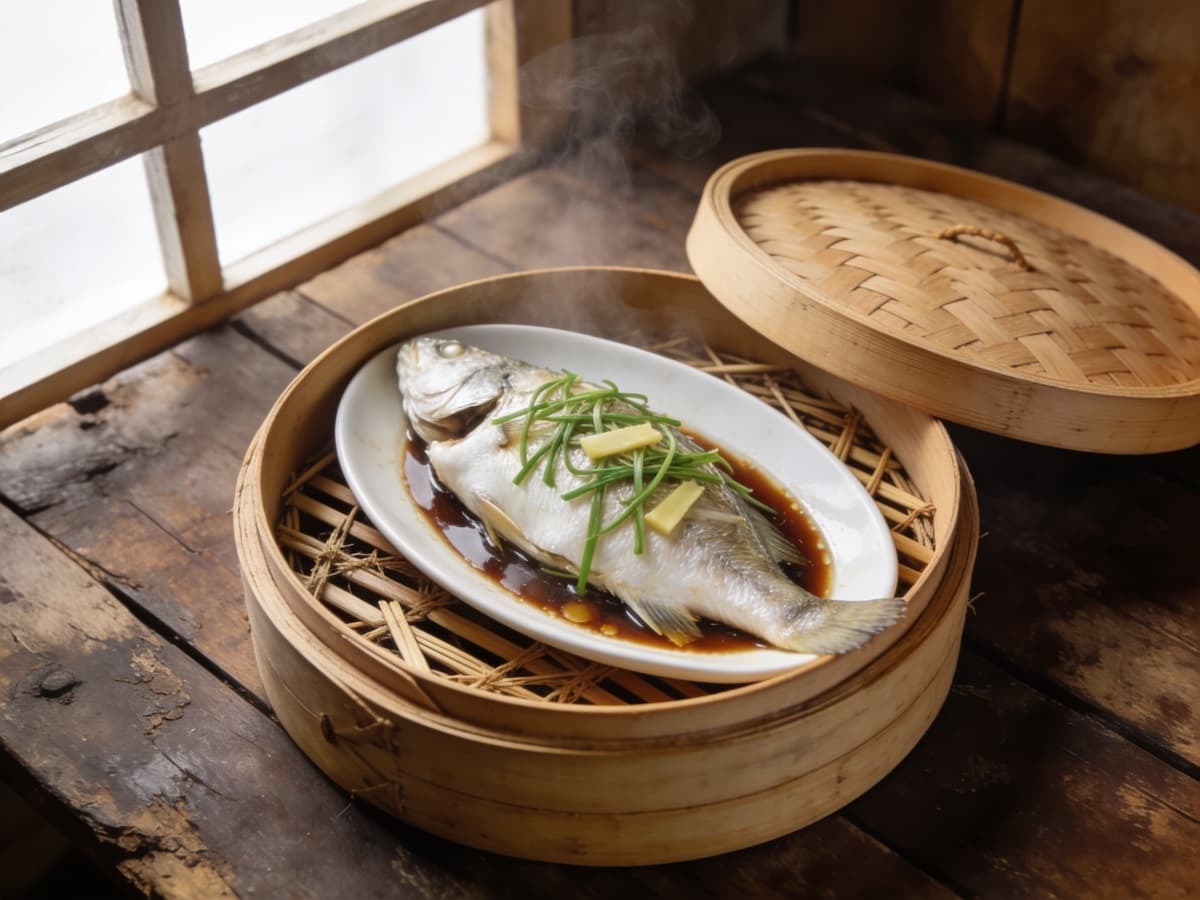
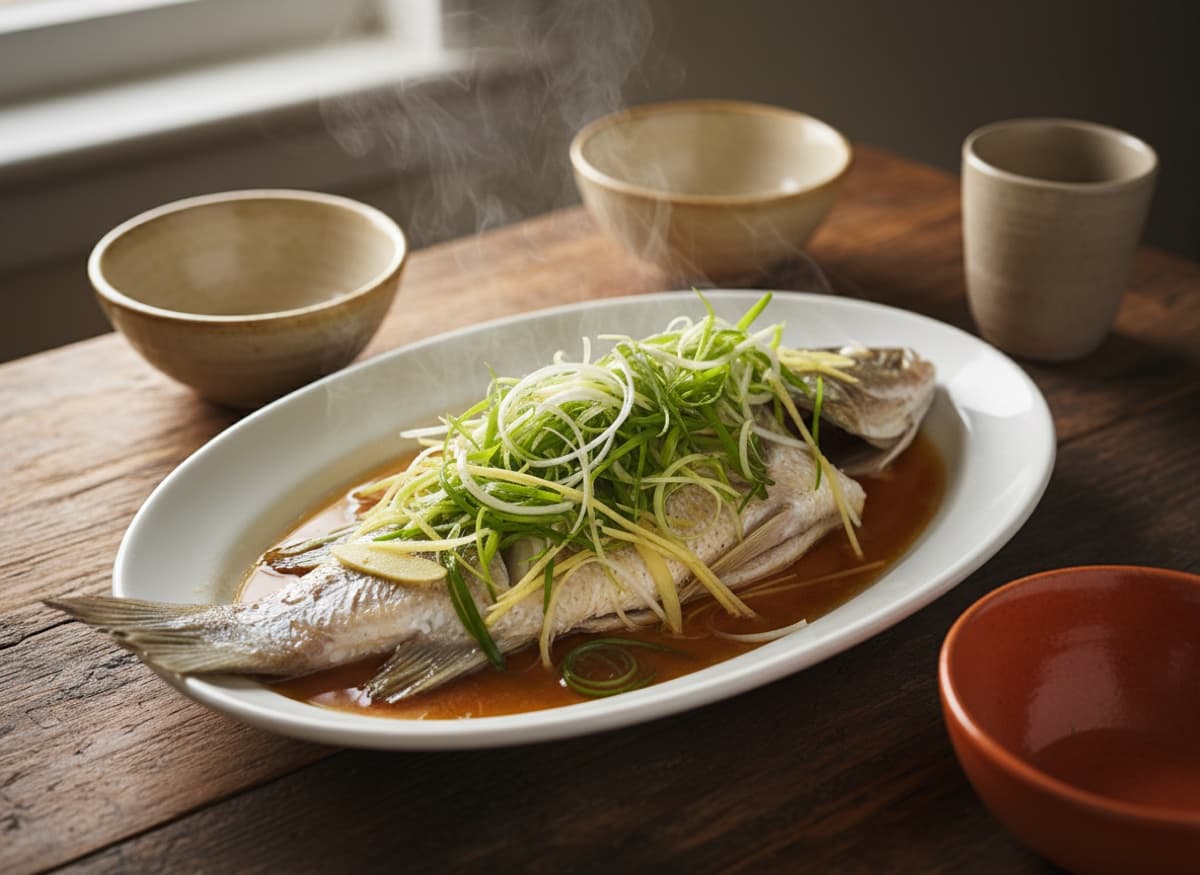
Twenty minutes later there was Steamed Fish with Ginger and Scallion, Stir-Fried Bok Choy with Garlic, and a pot of rice on the table. Twenty minutes. I have waited longer than that for an app to find me a driver.
So I did the thing I always do when I don't understand something. I got a notebook. While she ate, I opened every cupboard and wrote down every staple she actually keeps. Soy sauce. Rice vinegar. Dried shiitake. Ginger, garlic, scallions. A few bottles and jars I could name in one breath. I stood there and counted the list twice, because I didn't believe it. Twelve.
Twelve. My own kitchen had more sauce bottles than that, every one of them bought for a single recipe I tried once and abandoned. Her twelve staples were the entire supply line for basically everything I had ever eaten at her table.
Then I Did the Math on the Back of a Takeout Receipt
A family takeout order runs forty, fifty dollars easily where I live. Two mains, rice, a soup, the fees, the tip. Do that twice a week and you can feel it in the month. I know, because I felt it and kept doing it anyway.
The dinner I watched her make came from one piece of fish, a head of bok choy, and pantry staples she'd bought weeks earlier. I won't pretend I priced it out to the penny, but it was obviously a fraction of one takeout night. Not a small fraction, either.
And here's the part that stung. The takeout wasn't even the better food. That food travels badly. It arrives sweet and tired, steaming its own container soggy. Her fish came off the stove hissing, with the scallions still bright green on top.
I wasn't paying for better food. I was paying for a belief. The belief that I couldn't do this myself.
You're Not Bad at Cooking Chinese Food. You've Been Trying to Cook Restaurant Chinese Food.
It took me an embarrassingly long time to see it, and when I finally did, it was late and I was scrolling recipe sites in bed. Every 'easy' Chinese recipe I had ever failed at was a restaurant dish. Fried rice like the place on the corner makes it. Orange chicken. Crispy anything.
Restaurant dishes are built for restaurants. Burners hotter than anything in your house. A deep fryer. A line cook making the same dish two hundred times a night. Twenty sauces within arm's reach, because the menu has ninety items on it.
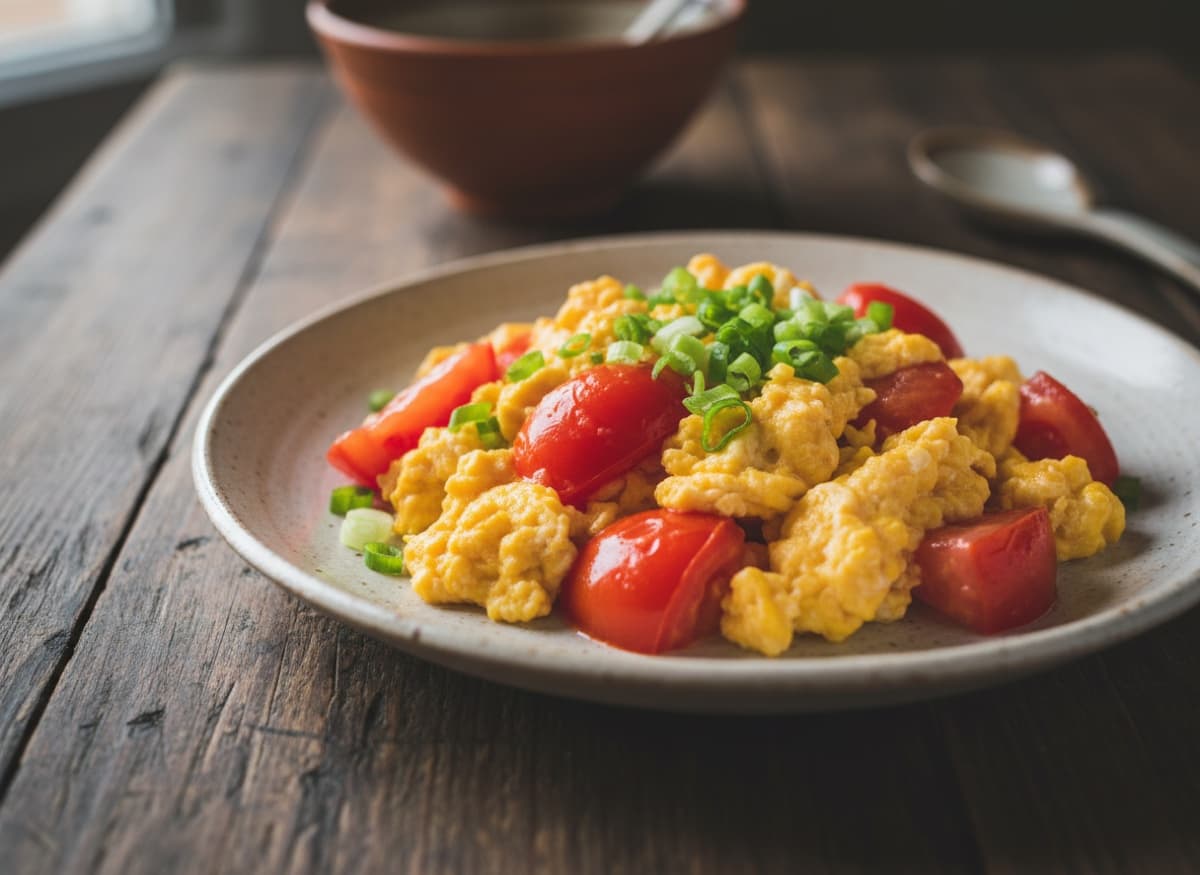
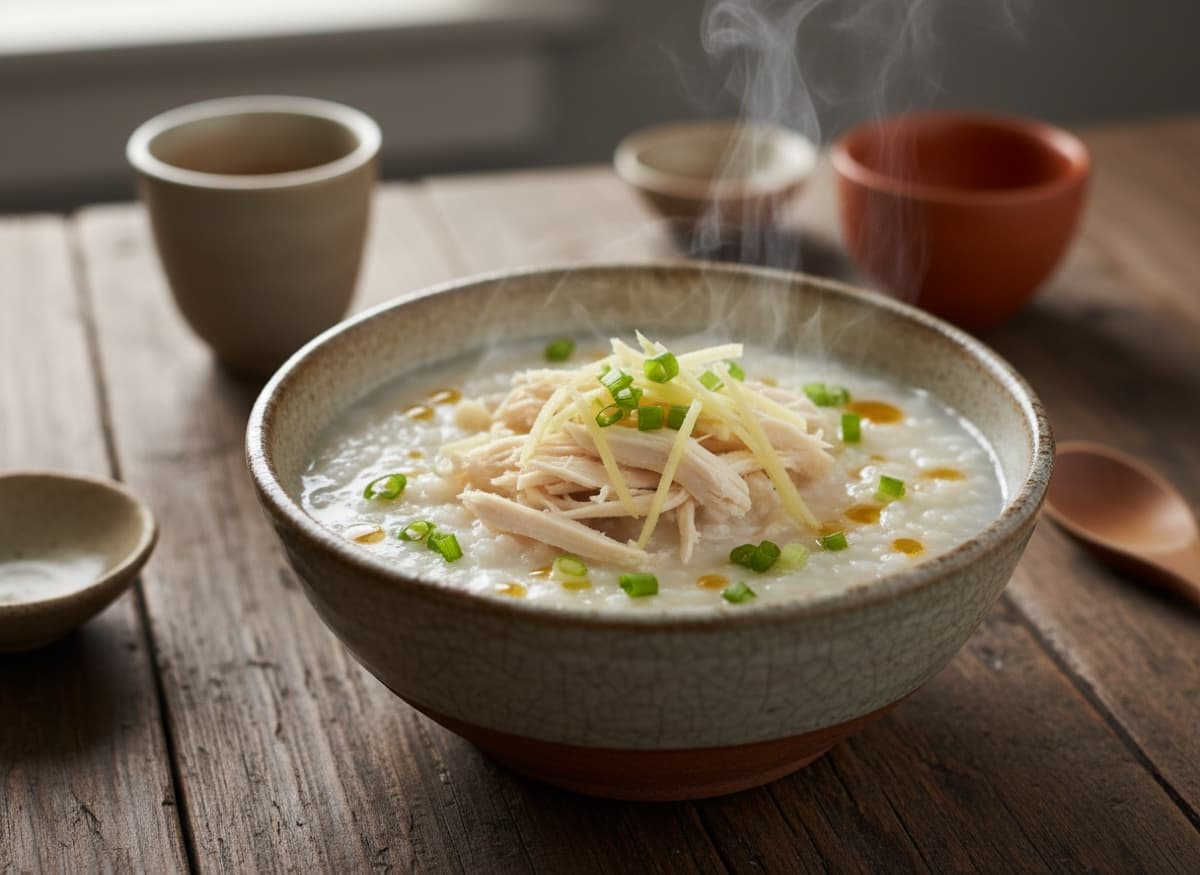
Home dishes are a different animal entirely. Tomato and Egg Stir-Fry is eggs, tomatoes, scallions, a pinch of sugar, ten minutes, one pan. Plain Rice Congee is rice, water, and patience. Steamed fish is fish, ginger, scallion, soy sauce, and a plate balanced over a pot.
Nobody had ever told me those were two different kinds of cooking. So every time a restaurant recipe defeated me, I filed it as proof that I couldn't cook this food. I could. I was just standing at the wrong door.
The Recipe Sites Translated the Menu, Not the Kitchen
Once I saw it, I couldn't stop seeing it. The Chinese recipes that made it into English were overwhelmingly the restaurant menu, because that's what people already knew and searched for. General Tso's. Sesame chicken. Dishes my grandmother has never once cooked in her life.
The home kitchen mostly never got translated. It got passed down by standing next to someone. When I asked my grandmother for measurements, her answer was 'you watch, you smell, you taste.' Which is beautiful, and completely useless if your grandmother lives seven thousand miles away, or if you never had one who cooked like this at all.
So the loop keeps running. You love the food, you find a restaurant recipe, you buy five sauces, it comes out wrong, and the failure confirms the belief that this cooking is beyond you. It was never a skill problem. It's a translation problem.
That is the actual reason we made this book. She cooked, I measured, and we argued a little about tablespoons.
There Are Four Ways to Get This Food on Your Table. I've Paid for Three of Them.
Takeout. I did it for years. It's fine, sometimes. But it costs a takeout price every single time, it arrives twenty minutes past its best, and an app decides what you're having based on what's nearby. You end up eating the corner restaurant's menu, forever.
Meal kits. Tried those too. The food is decent, but you're paying several times a home-cooked price per plate for someone to portion out your garlic, and the menu is still someone else's idea of your week. Cancel the box and the knowledge leaves with it.
Recipe sites. Free, endless, and mostly the restaurant menu in disguise. Twenty-ingredient lists, a wok you don't own, a bottle of something you'll use twice. I have a shelf of those bottles. It's a museum of good intentions.
The fourth way is the one nobody was writing down. Cook the way the families themselves actually cook on a normal Tuesday. A small pantry. One pot or one pan. Three or four ingredients doing all the work. That way was sitting in my grandmother's kitchen the entire time.
Stock. Simmer. Serve. That's the Whole System.
When I finally organized fifty years of her cooking into English, it collapsed into three moves.
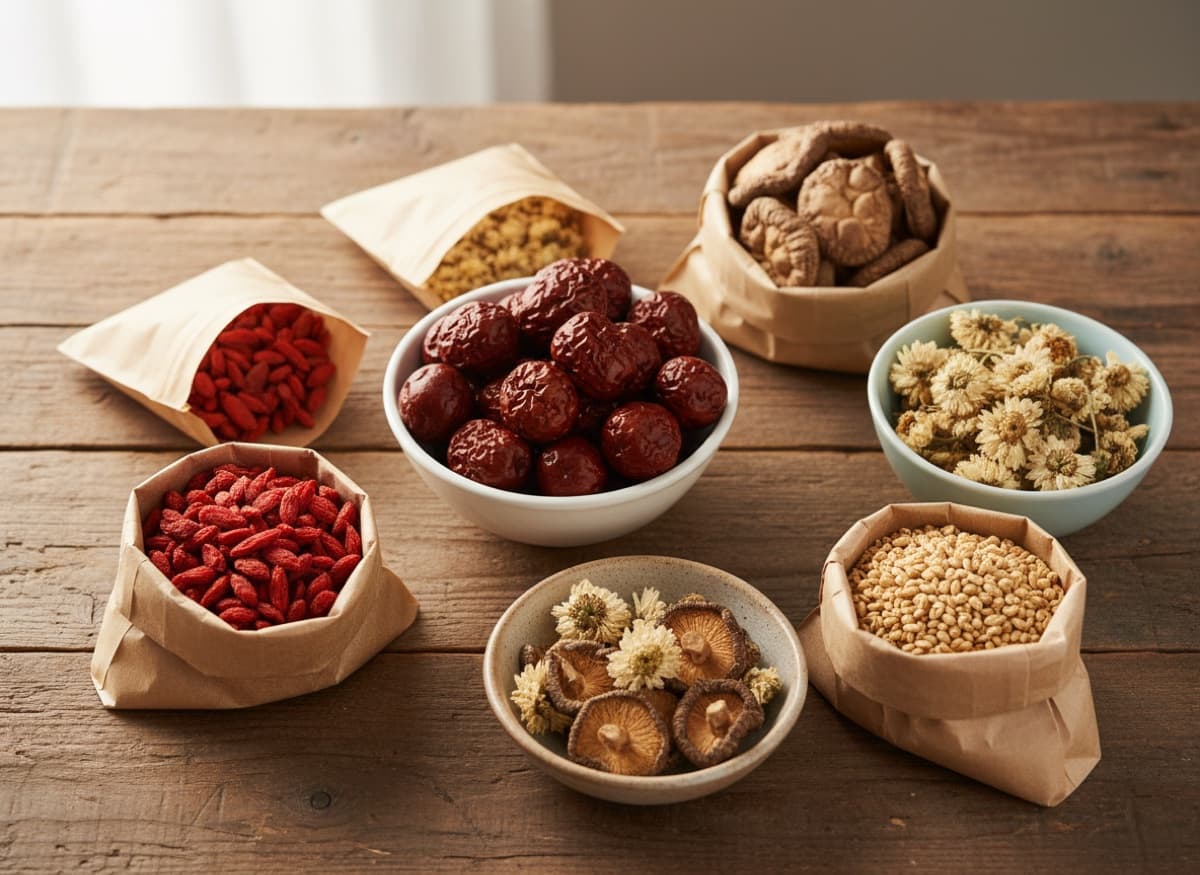
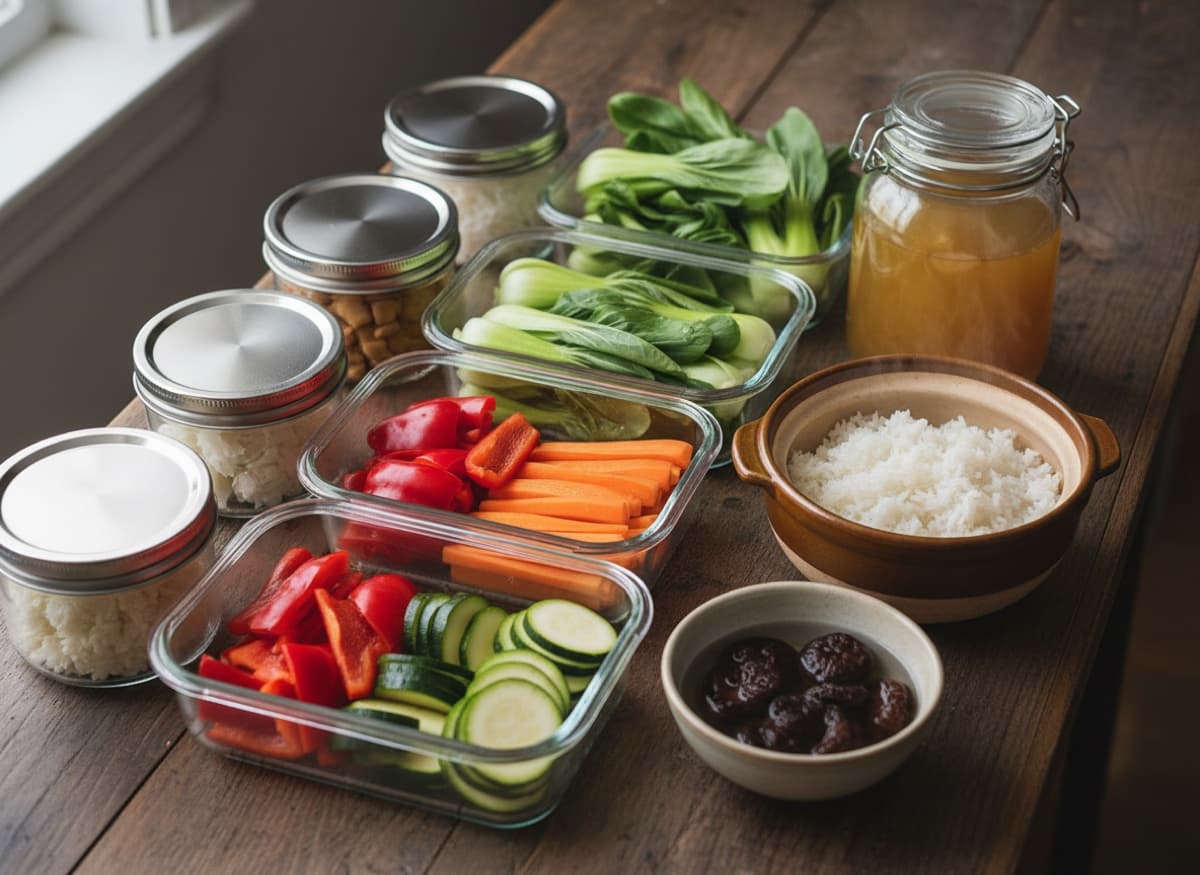
Stock. You buy about twelve staples, once. Soy sauce, toasted sesame oil, rice vinegar, cornstarch, dried shiitake, and the rest. The full list is in the front of the book, and it covers all forty-five recipes. Not each recipe. All of them.
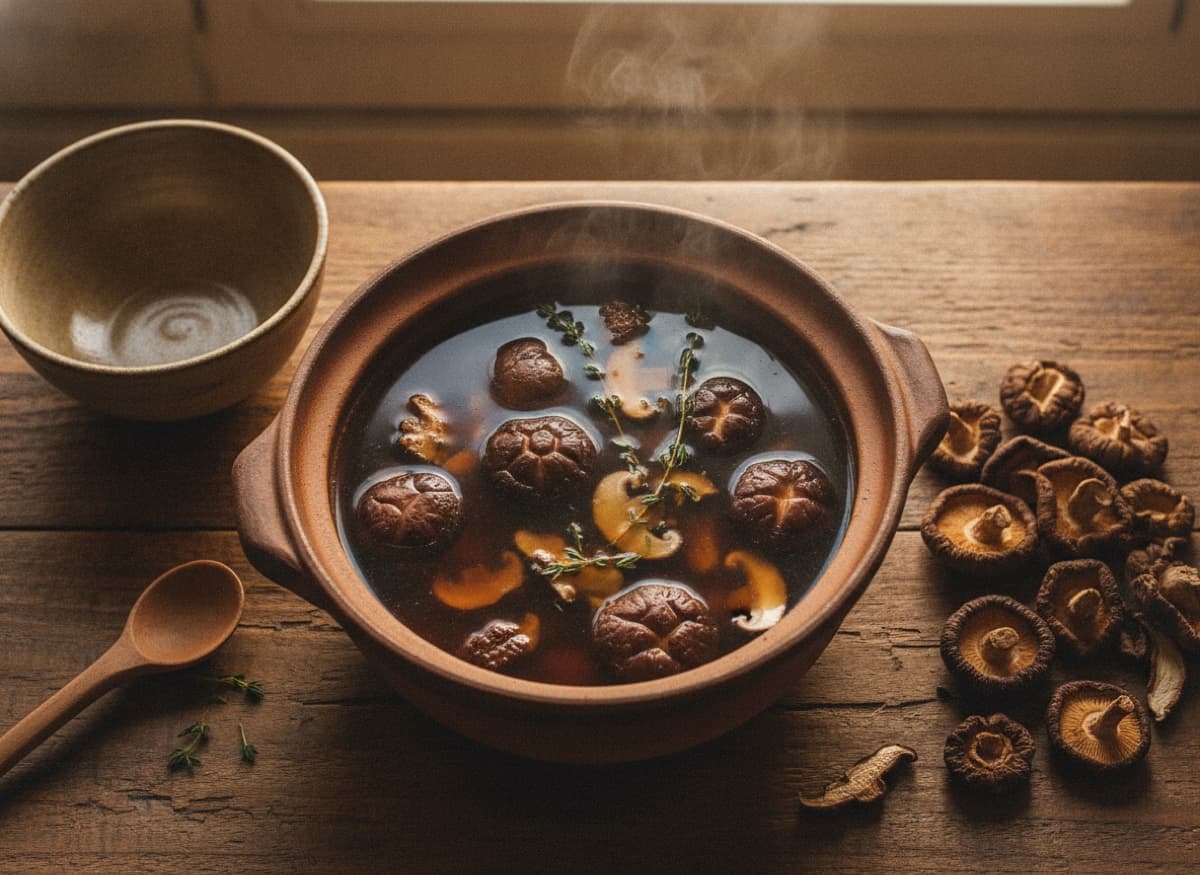
Simmer. Most of these dishes are a pot doing quiet work while you do something else. Everyday Mushroom Broth is dried mushrooms, water, and time. Congee is rice at a low bubble. The stove does the cooking. You mostly do the waiting.
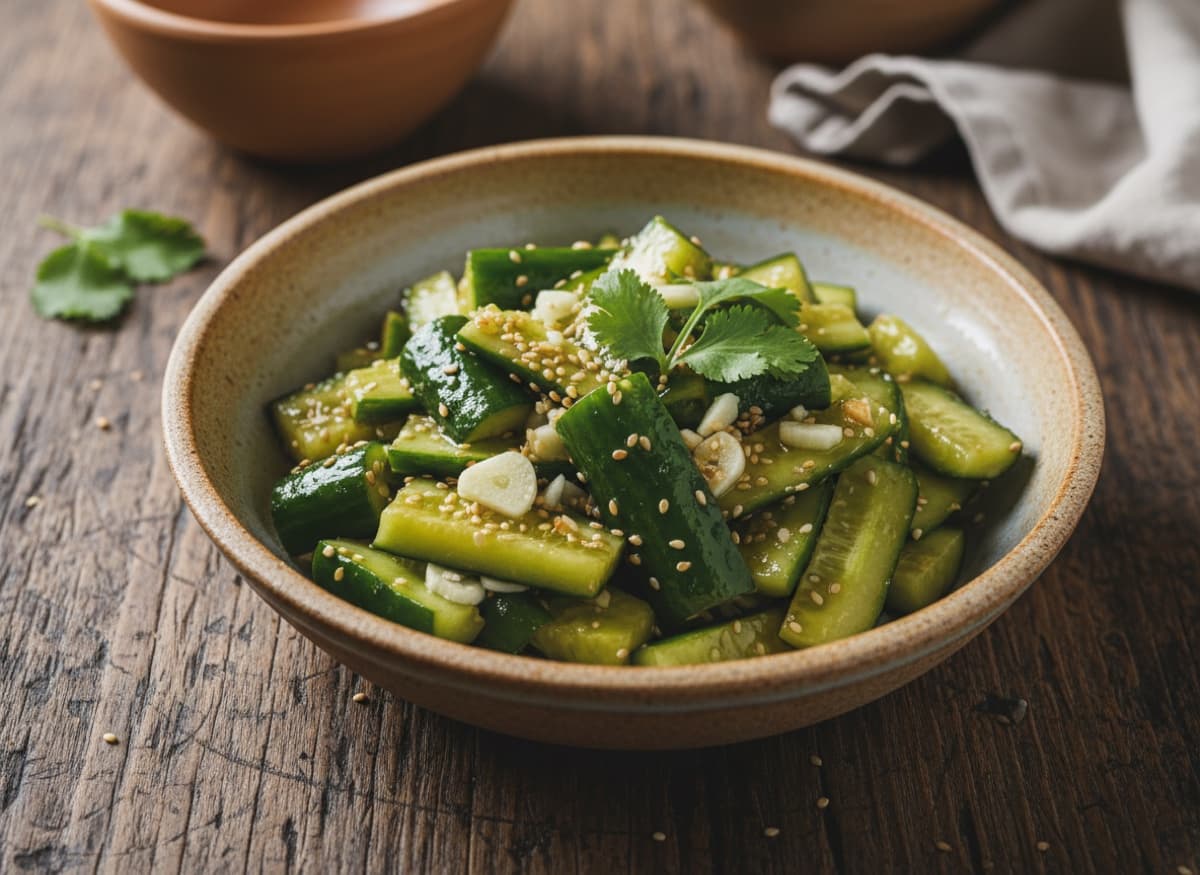
Serve. Every recipe is one page. What you need, numbered steps, and a note on when our family actually makes it. Ginger Chicken Congee when someone wants something soft and warm in a bowl. Smashed Cucumber Salad when it's too hot to stand near a stove.
$16.99 · Instant download · 30 day money back guarantee
Why You Can't Just Wing It. I Tried, and Mostly Fed the Trash Can.
You could try to reverse-engineer all this from free recipes. Here is why that kept failing me even after I understood the idea.
The pantry. Without the actual list, you buy five sauces for one dish instead of twelve staples for forty-five dishes. That list is the difference between a working pantry and a graveyard shelf.
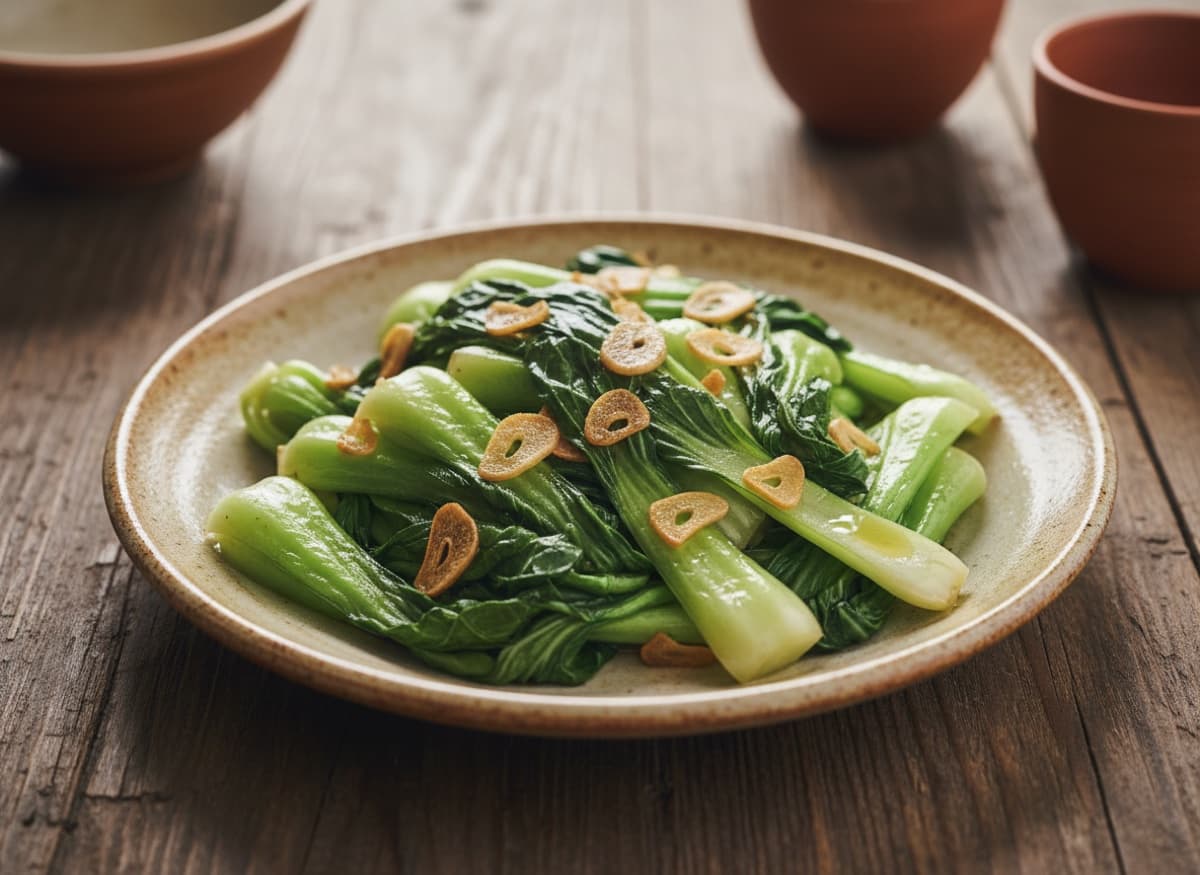
The order. Stir-fried bok choy is a three-ingredient dish that lives or dies on sequence. Garlic into the oil at the wrong heat and it turns bitter. Stems and leaves go in at different moments, and guessing which is how half the dish ends up limp. The order is three lines in the book.
The ratios. Congee is a rice-to-water question, and the answer changes depending on whether you want it thick or silky. She knows it by eye. I wrote it down in actual cups, so you don't need her eyes.
None of this is hard, it's just specific. And specific is exactly what the free internet was never giving me.
What the First Week Actually Looks Like, Night by Night
When I say this book is doable, I mean it in the most literal way I can. There's a first week I built from its recipes, the same one I'd hand a friend. It's a plan, not a promise. And it is deliberately not heroic. That's the point.
Every dish in it is one page long. If a night falls apart and you order pizza, nothing breaks. The pantry keeps. You just pick it back up the next evening.
It's Not a Course. It's Not a Subscription. It's Not a Chef Book.
So here is what we actually made, now that you know why we made it.
It is not a cooking course with hours of video you'll never finish. It is not a subscription that keeps billing while you're not looking. It is not a cheffy hardcover where recipes begin with 'first, make your own XO sauce.'
It's a 59-page digital cookbook called Grandma Mei's Chinese Kitchen Cookbook. Forty-five recipes in three collections: Morning Teas and Warm Drinks, Comforting Soups and Congees, and Everyday Family Dinners. Fifteen recipes each.
Every recipe fits on one page. What you need. Numbered steps. When our family makes it. And the pantry list sits right up front, the same roughly twelve staples I counted in her cupboard that Wednesday night.
One more thing, said plainly, because we put it in the book and on our site and I'd rather say it here than have you find it in the footer: Grandma Mei and Lin are the storytelling voice of this cookbook. The recipes are real; the grandmother is a way of telling them.
One Takeout Night Costs More Than Two of These Books
The book is $16.99. Once. That's the whole pricing section, but let me put it next to the alternatives anyway.
Here's the only comparison that matters. A family takeout order runs forty, fifty dollars easily. A week of meal kits for a family runs several times that. The book costs less than half of one takeout night, and you keep it forever.
If it replaces even one delivery order, it has roughly paid for itself twice. Everything after that is rice and scallions.
What You Get for $16.99
Instant digital download, PDF, 59 pages. It works on your phone, which matters more than it sounds, because the pantry list earns its keep in the grocery store aisle.
At checkout you'll see two optional add-ons, a Weekly Table Plan and a Quick Start Kitchen Kit. They're there if you want them. The cookbook stands completely on its own without either.
$16.99 · Instant download · 30 day money back guarantee
Three Months From Now, It's One of Two Tuesdays
The first Tuesday looks like tonight. It's 6:40, the apps are open, the driver is twelve minutes away, and dinner is forty-something dollars of cartons that taste like the drive over. Nothing wrong with that Tuesday. It's just the same Tuesday, again, at that price, indefinitely.
The second Tuesday, there's a pot at a low bubble and the kitchen smells like ginger and rice. Dinner was never a question, because Tomato and Egg Stir-Fry takes ten minutes and the pantry is already stocked. Twelve staples on the shelf, forty-five answers in one PDF. That Tuesday costs a couple of dollars, and it's yours for good.
$16.99 · Instant download · 30 day money back guarantee
P.S. I still think about standing in front of that pantry with my notebook, counting to twelve and feeling a little cheated. Nobody had hidden anything from me. I had just never looked. The list is printed at the front of the book, so you get to skip straight to the part where you look.
P.P.S. If you're on the fence, buy it for the pantry list alone. Twelve staples that cover forty-five dishes, gathered in one grocery trip. That single page changed how I shop, and it's worth the $16.99 before you ever turn on the stove.